Around a decade ago, the first smartphone wireless charging technology was developed by a Finnish startup, with the intent of introducing it in the market eventually. A few years after, the vision came to fruition as wireless charging became widely available for consumers.
 |
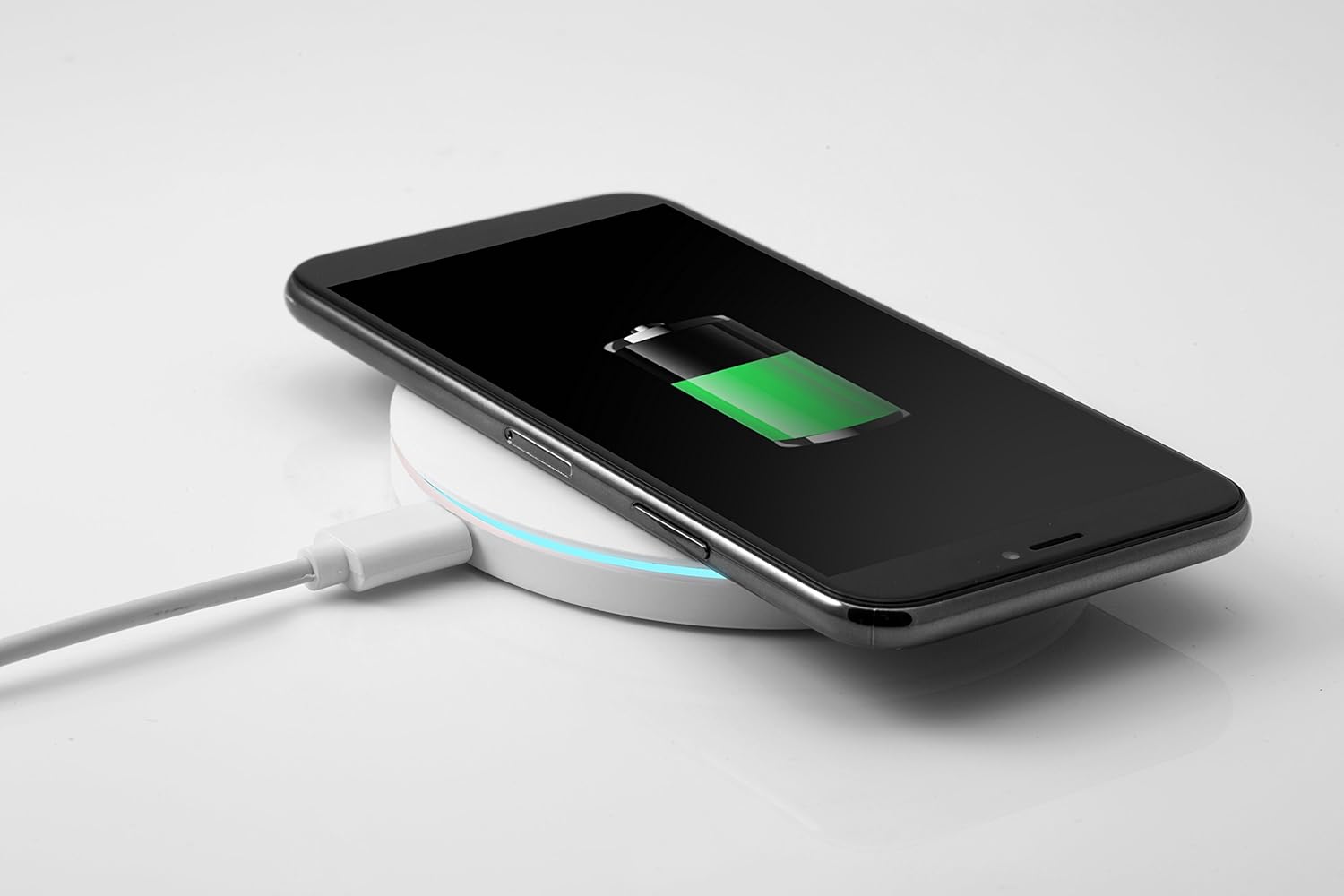
| Image source: amazon.com |
An industry standards war, though, had held back the potential of the technology because the presence of two standard versions of wireless charging created a hurdle in the compatibility between chargers and smartphones.
During the start of the year, there were two breakthroughs in the industry. First is that the debate over which standard to follow ended when all wireless charger makers agreed to be a part of the Wireless Power Consortium. The second is that the development of a “true” wireless charging technology has been reported.
The wireless chargers in the market today still involve a wire as a charging pad, on which the smartphone is placed, has to be plugged into an electric outlet. While no wire is directly attached to the device, the phone still cannot be charged anywhere in the room other than atop the charging pad.
But engineers at the University of Washington are working on a true wireless charger using laser technology. It involves firing an invisible beam (the study used red visible beams for demonstration purposes) from a laser emitter that targets a thin power cell mounted at the backside of a smartphone.
The results of the experiment showed that the laser technology was as efficient as charging the phone as using a standard wired charger. Fail-safe mechanisms were also integrated through a heatsink that dispels excess heat due to the laser and guard beams that turn off the charging beams if a person moves into the path of the laser.
Laser wireless charging may be months, or even years, away from commercialization, but the future is bright for the technology.
 |
| Image source: digitaltrends.com |
IT researcher and scientist Gina Benderson here. Let’s discuss more about the latest in technology by c0nnecting with me on Twitter.


No comments:
Post a Comment